

Products
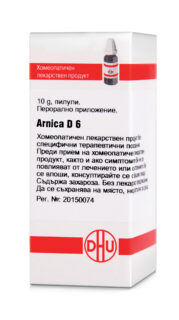
Arnica D6; Arnica D30
Homeopathic remedy No. 1 for trauma and accidental injuries. Indicated in conditions involving capillary and venous disorders.
TRAUMA
Indications:
- Closed injuries of soft tissues: contusions, sprains, strains, dislocations
- Postoperative states
- Postpartum recovery
- After dental procedures
Therapeutic benefits:
- Relieves pain
- Supports wound healing
- Helps prevent inflammatory reactions
- Promotes resorption of hematomas
VASCULAR PROTECTION
NB! May be administered as supportive first aid in suspected infarction or stroke until specialized medical assistance is available.
- Anticoagulant effect
- Strengthens vascular walls
- Increases capillary resistance
Clinical applications:
- Hematuric nephritis
- Microscopic hematuria in athletes
- Painful varicose veins and hemorrhoidal crises
- Minor hemorrhages (ecchymoses)
MUSCLE FATIGUE
Indications:
- Muscle soreness, pain, and stiffness following physical overexertion (occupational or sports-related)
- Hoarseness in singers and public speakers
- Functional disturbances of cardiac muscle activity during physical exertion
Dosage and Administration
Acute conditions:
- Arnica D6 – 1 dose (10 globules) every 30–60 minutes until improvement.
- Arnica D30 – 1 dose (10 globules) 3–4 times daily.
Chronic conditions:
- Arnica D30 – 1 dose (10 globules) 2–3 times daily.
Please read the information provided on the packaging carefully and consult your physician or pharmacist if necessary.
- It is recommended that homeopathic treatment be conducted under the supervision of a qualified homeopathic practitioner. Dosage and administration should always be tailored to individual needs. There is no risk of overdose or dependency.
- The globules should be placed under the tongue and allowed to dissolve slowly. Food and beverages should be avoided for 10–15 minutes before and after administration.
- The information provided is based on the long-standing practical experience of the German homeopathic school and does not replace consultation with a medical professional when required, nor does it substitute ongoing therapy prescribed by a physician.
Sources:
- Materia Medica – Dr. William Boericke; Roger Morrison; K. N. Mathur
- Handbook of Homeopathy – Prof. Mathias Dorcsi (Emas, 2006)
- Practical Homeopathy – Sylvia Treacher (Parragon, 2002)