

Products
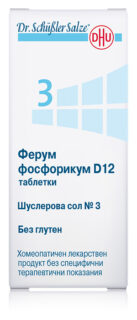
Schuessler salt No. 3 Ferrum phosphoricum D12
ACUTE inflammation, Colds, and Flu; First aid for the IMMUNE SYSTEM; IRON Deficiency
- Early stage of inflammatory conditions (such as colds and flu) with fever up to 38.5°C.
- Iron-deficiency anemia.
- Supports the normal function of the immune system.
- Supports oxygen supply to the tissues.
Mineral salt for first aid for any infection or injury. Suitable in cases of colds, flu, minor wounds, abrasions, cuts, and at the early signs of sunburn. Supports normal iron metabolism and contributes to healthy oxygen transport in the body.
Main Areas of Use
Schuessler Salt No. 3 is one of the most widely used Schuessler Salts, as it is commonly applied for first support in acute situations and is valued for its rapid onset of action. It is frequently used during the cold and flu season and at the first signs of viral infections.
- Fever up to 38.5°C (may be combined with Schuessler Ointment No. 3).
- Sore throat.
- Runny nose, common cold and viral infections.
- To support immune function (in combination with Salts No. 6 and No. 7).
- Diarrhea or constipation.
- Iron deficiency (anemia).
Dosage and Administration
- The tablets are placed under the tongue and allowed to dissolve slowly; for young children, the tablets may be dissolved in a small amount of water.
- It is recommended to avoid food and drinks 10-15 minutes before and after taking Schuessler salts.
Acute conditions: 1–3 tablets, 3–6 times daily, for 1–2 weeks.
Emergency conditions: The dosage can be increased many times depending on the severity of the symptoms – e.g., 1 tablet every 5 minutes for 2-4 hours.
Another method of administration is the so-called “hot drink”: Dissolve 10 tablets of the prescribed salt in hot water. Sip slowly in small amounts, allowing the liquid to remain briefly in the mouth before swallowing.
Chronic conditions: 1–3 tablets, 1–2 times daily, for 2–4 months.
Prophylactic use: 1–3 tablets, 1–2 times daily, for at least 6–8 weeks.
- Dosage and administration should always be tailored to individual needs. There is no risk of overdose or dependency.
- The information provided is based on the long-standing practical experience of the German school of Schuessler therapy and does not replace consultation with a medical professional when necessary, nor does it substitute ongoing therapy prescribed by a physician.
Sources:
- Schuessler Salts for Children – Günther H. Heepen, Graefe und Unzer Verlag, Munich, 2009.
- Schuessler’s Salts – Günther H. Heepen, Graefe und Unzer Verlag, Munich, 2009.
- Schuessler Salts: Handbook of Dr. Schuessler’s Biochemistry – Thomas Feichtinger, Elisabeth Mandl, Susanna Niedan-Feichtinger, Kibea Publishing, 2013.
- Schuessler Salts for Children – Angelika Gräfin Wolffskeel von Reichenberg, Ciela Publishing, 2014.
- Schuessler Salts and Nutrition According to Biorhythms – Angelika Gräfin Wolffskeel von Reichenberg, Ciela Publishing, 2016.
Please read the package leaflet carefully and consult your physician or pharmacist if necessary.