

Products
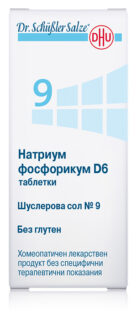
Schuessler salt No. 9 Natrium phosphoricum D6
ACID-BASE Balance; LIPID Metabolism
- Deficiency of this salt may lead to chronic acid overload (gout, mycoses, kidney and gallbladder stones, rheumatic conditions).
- Essential mineral for lymphatic function.
- The salt of metabolic regulation.
Mineral salt for maintenance of acid–base balance and proper metabolic activity. Supports the breakdown of lactic acid during increased physical exertion; essential in gout and rheumatic complaints. Regulates sebum secretion from sebaceous glands and is an important component in the management of acne.
Main Areas of Use
- Oily skin and hair; acne; comedones; excessive perspiration with acidic odor.
- Digestive disturbances following consumption of fatty foods.
- Arthritis; rheumatic complaints; gout.
- Prevention of kidney and gallstone formation (in combination with Salts No. 2 and No. 11).
- Acceleration of metabolism and support in weight reduction (in combination with Salts No. 5 and No. 10).
- Fungal infections (in combination with Salts No. 3, No. 8, and No. 10).
- Heartburn (in combination with Salt No. 8).
Dosage and Administration
- The tablets are placed under the tongue and allowed to dissolve slowly; for young children, the tablets may be dissolved in a small amount of water.
- It is recommended to avoid food and drinks 10-15 minutes before and after taking Schuessler salts.
Acute conditions: 1–3 tablets, 3–6 times daily, for 1–2 weeks.
Emergency conditions: The dosage can be increased many times depending on the severity of the symptoms – e.g., 1 tablet every 5 minutes for 2-4 hours.
Another method of administration is the so-called “hot drink”: Dissolve 10 tablets of the prescribed salt in hot water. Sip slowly in small amounts, allowing the liquid to remain briefly in the mouth before swallowing.
Chronic conditions: 1–3 tablets, 1–2 times daily, for 2–4 months.
Prophylactic use: 1–3 tablets, 1–2 times daily, for at least 6–8 weeks.
- Dosage and administration should always be tailored to individual needs. There is no risk of overdose or dependency.
- The information provided is based on the long-standing practical experience of the German school of Schuessler therapy and does not replace consultation with a medical professional when necessary, nor does it substitute ongoing therapy prescribed by a physician.
Sources:
- Schuessler Salts for Children – Günther H. Heepen, Graefe und Unzer Verlag, Munich, 2009.
- Schuessler’s Salts – Günther H. Heepen, Graefe und Unzer Verlag, Munich, 2009.
- Schuessler Salts: Handbook of Dr. Schuessler’s Biochemistry – Thomas Feichtinger, Elisabeth Mandl, Susanna Niedan-Feichtinger, Kibea Publishing, 2013.
- Schuessler Salts for Children – Angelika Gräfin Wolffskeel von Reichenberg, Ciela Publishing, 2014.
- Schuessler Salts and Nutrition According to Biorhythms – Angelika Gräfin Wolffskeel von Reichenberg, Ciela Publishing, 2016.
Please read the package leaflet carefully and consult your physician or pharmacist if necessary.